
Printing inks
Choose among water-based, oil-based and UV-curable inks according to the printhead, ink path, material and process.
FHES / INK & CONSUMABLES
Includes water-based, oil-based and UV-curable inks, with compatible cleaning agents and printhead wipes; select through sample printing based on the printhead, substrate and post-processing conditions.
Based on the FHES Ink and Consumables brochure. The image is a brochure product illustration; specific models, packaging sizes, colors and compatibility are subject to product information and sample printing results.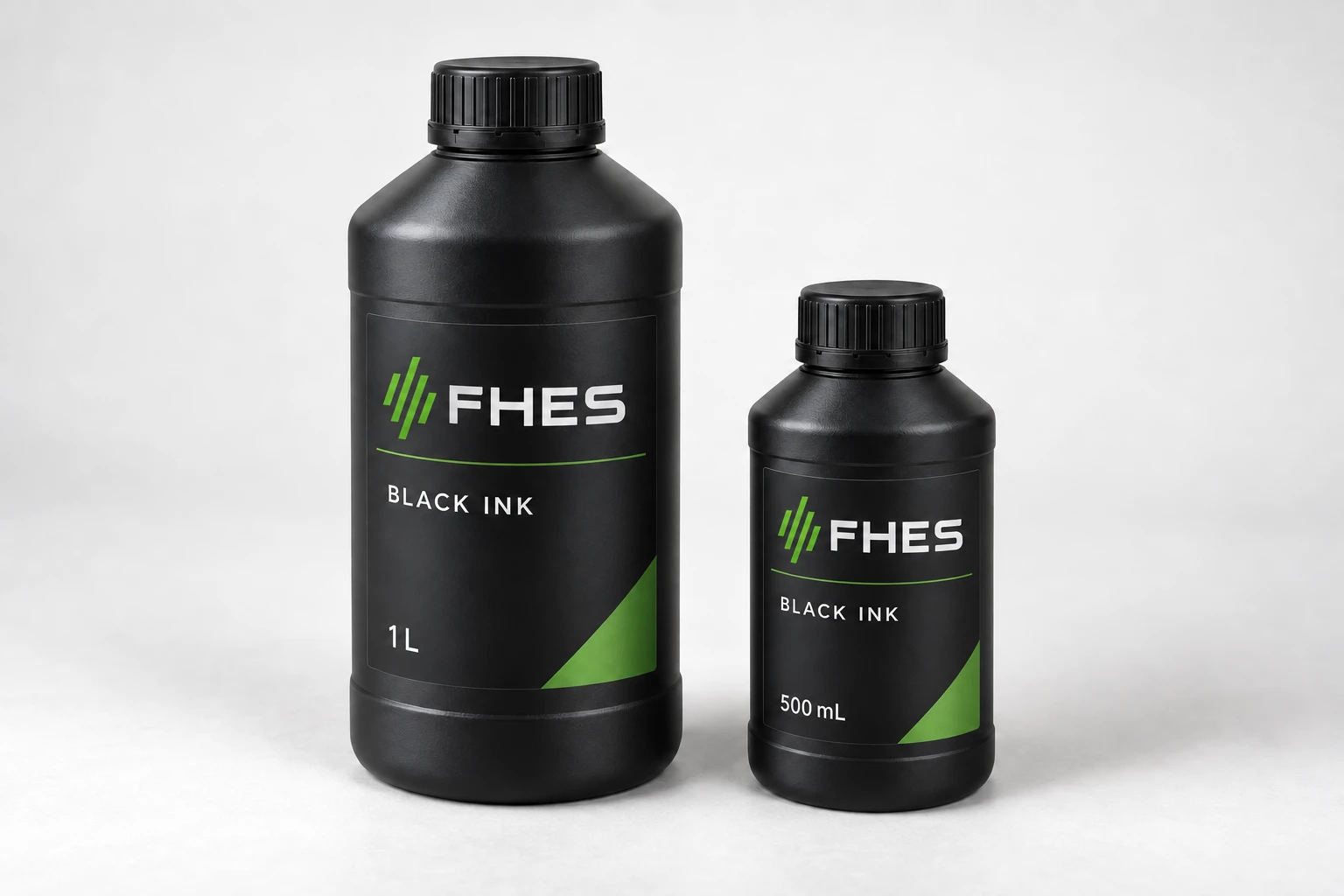
01 / PRODUCT RANGE
The brochure states there are more than 100 product varieties; confirm specific models and compatibility through product information and sample printing.
Choose among water-based, oil-based and UV-curable inks according to the printhead, ink path, material and process.
Select according to the corresponding ink system and equipment maintenance procedure; do not directly mix different systems.
Use suitable clean wiping materials, paying attention to lint shedding and improper friction.
Test adhesion, clarity and resistance using actual materials and process conditions.
02 / INK ROUTES
The same material may allow several choices. First define the finished-product requirements, then select the ink through sample printing with actual materials.
For validated materials such as paper; consider absorption, drying, black density and water-resistance requirements.
For the corresponding printhead/material combination; check wetting, adhesion, drying and post-processing conditions.
The printed image is formed using a compatible UV curing solution after printing; match the light source, energy and substrate.
Explore UV Curing Systems ↗Results depend jointly on printhead compatibility, material formulation, surface treatment, printing parameters and drying or curing conditions; the ink category itself does not mean suitability for every material.
03 / SUBSTRATE + COLOUR
Black, white, yellow, blue, red and green are among the available color options; confirm special colors against the target color sample and actual material.
For white ink, consider opacity and adhesion to the substrate; for black ink, consider black density, edges and code-scanning contrast. Check custom-color differences on the actual material after drying or curing.
04 / PROCESS + MAINTENANCE
Alcohol-rub resistance, alcohol erasability, boiling and freezing are different selection objectives; record their test conditions separately.
Validate using the actual alcohol concentration, wiping count and pressure, or the boiling/freezing temperature and duration.
Match the specific water-based, oil-based or UV ink model and the equipment maintenance procedure.
Arrange cleaning or moisture retention according to shutdown duration, ink characteristics and printhead requirements.
Rub resistance and erasability are opposite selection objectives. These properties cannot be promised for the entire range; follow the equipment and ink instructions for specific procedures.
05 / SAMPLE VALIDATION
Collect the printhead, material, print content and process conditions first, then propose specific ink and compatible consumables.
APPLICATION TEST / FHES
Provide the printhead, substrate, target color, post-processing method and actual samples to help select the ink and compatible cleaning consumables through sample printing.