
Circulation Pump
Organize recirculation actions according to operating status.
FHES / INK SUPPLY CCS
Ink flows through the internal recirculation path of a compatible printhead. The MCU integrates management of the circulation pump, negative pressure, solenoid valves, ink level, ink supply and heating. The brochure states negative-pressure control accuracy of ±0.05 kPa and temperature-control accuracy of ±0.5 °C.
Based on the updated FHES CCS Recirculating Ink Supply System brochure. The image shows the CCS control board; actual results depend on the printhead flow path, ink and site configuration.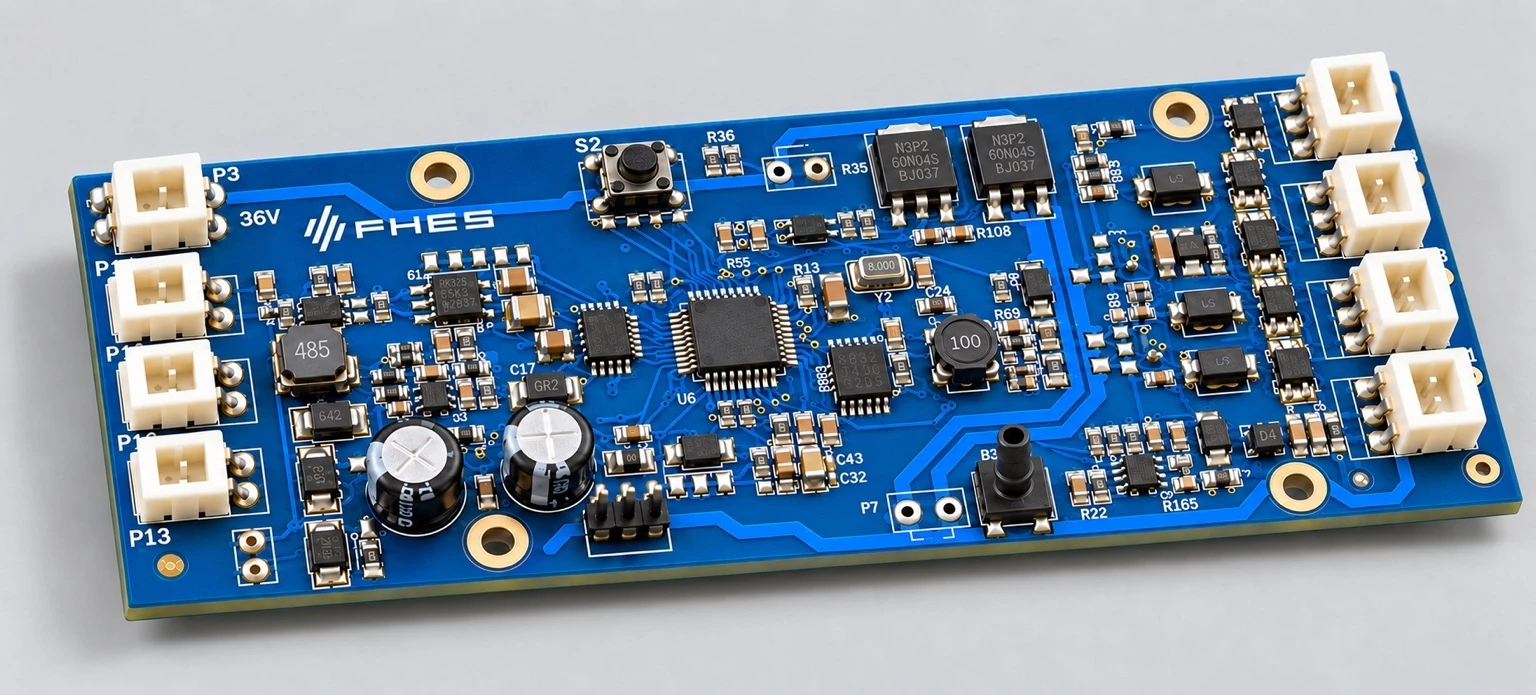
01 / PRINTHEAD RECIRCULATION
Ink supply, internal printhead recirculation and ink return form a continuous path that keeps the ink near the printhead refreshed.
Establish the ink supply conditions required by the compatible printhead.
Ink flows through the printhead's internal recirculation path.
Coordinate ink supply/return status and recirculation negative pressure.
Agitation in the primary ink tank and recirculation in the secondary cartridge focus on the ink supply side.
Explore PCS ↗Ink flows through the compatible printhead's internal path, focusing on ink renewal near the nozzles.
Internal recirculation paths, flow rates and the extent of ink exchange near the nozzles differ between printhead manufacturers; validate the specific recirculation effect with the compatible printhead and ink.
02 / MCU CONTROL
The circulation pump, negative pressure, solenoid valves, ink level, ink supply and heating work together according to operating status.
Organize recirculation actions according to operating status.
Manage target pressure and feedback, and coordinate ink supply and return.
Switch the corresponding ink-path actions according to operating conditions.
Ink level information is used for ink supply and exception alerts.
Manage ink replenishment using ink level and system status.
Use PID temperature control to manage the operating temperature range and overshoot.
03 / CONTROL DATA
The brochure provides CCS performance indicators. Define the measurement points, ink, environment and statistical window during project acceptance.
Control pressure changes in the recirculating system around the setpoint.
PID regulates heating output to maintain a stable operating temperature range.
These are two CCS performance indicators stated in the updated brochure. Printing quality must still be verified against feed/return pressure, startup and stabilization, the actual ink and temperature.
04 / APPLICATIONS
Internal flow in the printhead helps reduce localized sedimentation of highly pigmented ink, trapped bubbles and the risks associated with restarting after printing stops.
Continuously refresh ink in the flow path to reduce opportunities for localized deposits in stagnant areas.
Recirculation, pressure and temperature control support long production runs, shift changes and intermittent production.
The brochure lists applications at distances up to 50 mm; validate with the specified printhead, drop size, ink and operating conditions.
7 × 24 hours is a design target for continuous production lines, not a maintenance-free promise; check bubbles and nozzle condition as required by the equipment.
05 / PROJECT VALIDATION
Use actual materials and production-line conditions to confirm the flow path, accuracy, temperature control, nozzle condition and target printing distance.
APPLICATION TEST / FHES
Provide the compatible printhead, ink, target distance and production-line cycle time to help verify recirculation, temperature control and printing results.